

For many parents, the purée stage feels like solid ground. You finally get started with solids, your baby accepts a few spoonfuls, and feeding begins to feel predictable. Then the questions start creeping in. Am I supposed to be offering finger foods now? What if my baby isn’t ready?
If you are feeling unsure about moving from purées to finger foods, you are not behind, and you are not doing anything wrong. This transition is not about hitting a milestone on a specific date. It is about watching your baby and responding to how they are developing.
The Transition Is Not a Switch
One of the biggest misconceptions around starting finger foods is the idea that purées must suddenly disappear. In reality, most babies benefit from a gradual overlap. Purées do not need to end before finger foods begin. In fact, in our adult lives we eat many foods which are purées; mashed potatoes and smoothies for example.
Most babies start exploring finger foods when they begin solids at around 6 months, once they can sit upright, bring food to their mouth, and show interest in what is happening at the table. However, if you started solids with purées exclusively then the finger food introduction may come a little later.
Babies need chances to experience different textures so they can learn how food moves in their mouth, how to chew, and how to manage bites safely.
Why Texture Matters More Than We Think
Eating is not only about nutrition. It is a physical skill that develops with practice. When babies only eat smooth purées for too long, they miss out on important learning experiences.
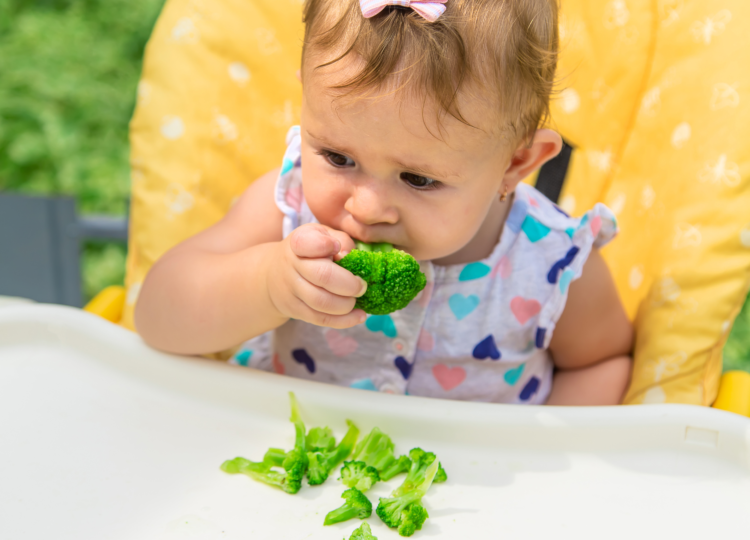
Finger foods help babies:
- Strengthen chewing and jaw muscles
- Learn how to move food from side to side
- Coordinate hands, mouth, and eyes
- Build confidence feeding themselves
Messy meals, squished food, and dropped bites are all signs that learning is happening. These moments can feel chaotic, but they are meaningful.
Gagging can be unsettling for parents, but it is a normal part of learning to eat. It is different from choking and often happens as babies adjust to new textures. With time and repeated exposure, most babies become more skilled and confident.
Read More: The Importance of Advancing Textures
You Do Not Have to Choose a Method
Feeding is not an all-or-nothing decision. You do not have to choose between purées or baby-led weaning.
Many families naturally settle into a middle ground, offering a mix of soft finger foods and spoon-fed options. A meal might include a few soft vegetable sticks, some mashed beans, and a spoon-fed yogurt. This approach allows babies to practice self-feeding while still enjoying familiar textures.
What matters most is that babies are given chances to participate in eating, not just be fed.
Keeping Finger Foods Safe
Safety concerns are often what keep parents stuck in the purée stage. The goal is not to avoid finger foods, but to prepare them in a way that supports safe exploration.
Good beginner finger foods are soft, easy to squish, and shaped so babies can grasp them. Steamed vegetables, ripe fruit, shredded meat, and toast strips are common starting points. Babies should always be seated upright and supervised during meals.
As confidence grows, variety and texture can gradually increase.
If Your Baby Prefers Purées
Some babies take longer to warm up to finger foods, and that is okay. Preference does not mean refusal forever.
You can support this transition by:
- Offering mixed textures, like mashed foods with soft pieces
- Letting your baby touch and play with finger foods without pressure
- Eating together and modeling chewing
- Continuing to offer finger foods consistently
Progress is rarely linear. Some days your baby may explore eagerly, and other days they may want familiar foods. Both are part of the process.
How BLW Meals Fits In
For many parents, knowing what to offer and how to prepare it is the hardest part. The BLW Meals app was created to make this stage feel more manageable, not more complicated.
Inside the app, you will find age-appropriate meals, texture guidance, and clear preparation instructions that grow with your baby. It supports families whether they are spoon-feeding, offering finger foods, or using a combination of both.


Comments (1)
How to transition to finger foods with your babysays:
em[…] shows that babies who begin feeding with traditional spoon-fed purees but do not advance in texture by around 10 months are more likely to develop picky eating habits […]