
When the temperature climbs, hydration becomes one of the most important things on a parent’s mind. Babies can’t tell you they’re thirsty, and their small bodies are significantly more vulnerable to dehydration than adults. Understanding how much fluid your baby needs can make a big difference in keeping them safe and comfortable all summer long.
Do Babies Need Extra Water in Hot Weather?
The answer depends on your baby’s age.
Under 6 months: Babies under 6 months should not be given water, even in hot weather. Breast milk and formula provide all the fluid they need. Giving water to a young infant can actually be dangerous, potentially causing a condition called water intoxication, which dilutes sodium levels in the blood.
6 months and older: Once solids begin, small amounts of water can be offered alongside meals. In hot weather, you may increase feeding frequency to help maintain hydration rather than offering large amounts of water.
Signs of Dehydration in Babies and Toddlers
Knowing what to look for is critical during summer. Signs that your baby may not be getting enough fluids include:
- Fewer wet diapers than usual (less than 6 per day for infants)
- Dark yellow urine
- Dry mouth or lips
- Sunken fontanelle (the soft spot on a young baby’s head)
- Unusual fussiness or lethargy
- No tears when crying
- Sunken eyes
If you notice any of these signs, contact your pediatrician promptly.
How Breastfeeding and Formula Feeding Help in the Heat
Breastfed babies may want to nurse more frequently in hot weather — this is completely normal and actually the best response to heat. Your breast milk adjusts in composition throughout the day, and the early, more watery foremilk acts like a thirst quencher. Follow your baby’s lead and offer the breast more often.
Formula-fed babies should be offered feeds at their usual concentration. Never dilute formula to “give more fluid”. This reduces the nutritional density and can cause the same sodium imbalance as plain water.
Hydrating Foods for Babies Starting Solids
Once your baby is 6 months or older and eating solids, foods with high water content are a helpful way to boost hydration:
- Watermelon: approximately 92% water and naturally sweet
- Cucumber: over 95% water — peel and cut into sticks
- Peaches and nectarines: juicy stone fruits that double as hydration
- Yogurt: a good source of both protein and fluid
- Pureed soups: cooled to room temperature or chilled for older babies
Practical Tips for Keeping Babies Hydrated in Summer
Increase feeding frequency. Rather than waiting for hunger cues, offer feeds more often on very hot days.
Nurse or bottle-feed in the shade. Feeding in direct sunlight adds to overheating. Try to find a cool, shaded spot during outdoor feedings.
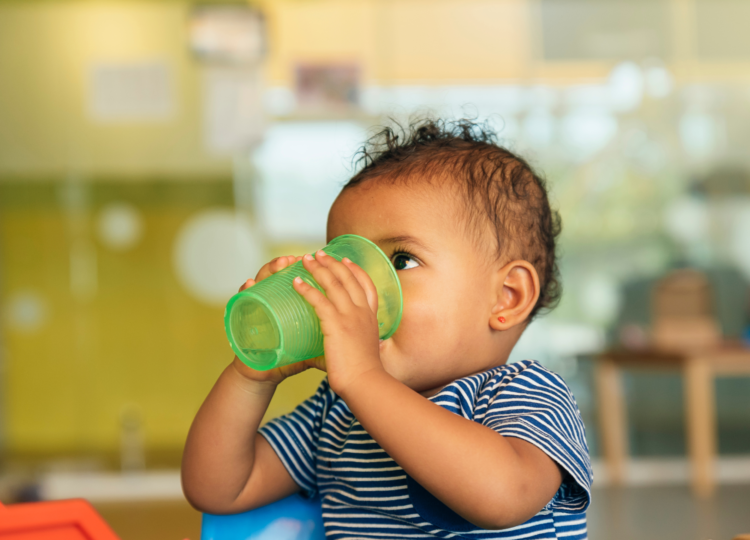
Use a cup from 6 months. Introduce water in an open cup or straw cup with meals. Small, consistent sips throughout the day are more effective than large amounts at once.
Keep formula cool. Prepared formula should never sit at room temperature for more than one hour in hot weather (compared to two hours in normal conditions).
Watch output, not just intake. The most reliable sign that your baby is well-hydrated is regular wet diapers.
When to Call the Doctor
Mild dehydration can often be managed at home with increased feeding. However, call your pediatrician right away if your baby:
- Has not had a wet diaper in more than 6 to 8 hours
- Has a sunken fontanelle
- Seems unusually drowsy, limp, or unresponsive
- Has a high fever alongside signs of dehydration
Dehydration in infants can escalate quickly, so always err on the side of caution.
The Bottom Line
For most parents, keeping babies hydrated in summer comes down to one simple rule: feed more often. Whether you’re breastfeeding, bottle-feeding, or navigating the world of solids, summer heat is a signal to offer fluids more frequently, watch for warning signs, and not hesitate to call your doctor if something doesn’t feel right.
Always consult your pediatrician if you have concerns about your child’s hydration status.