

Can my baby be picky?
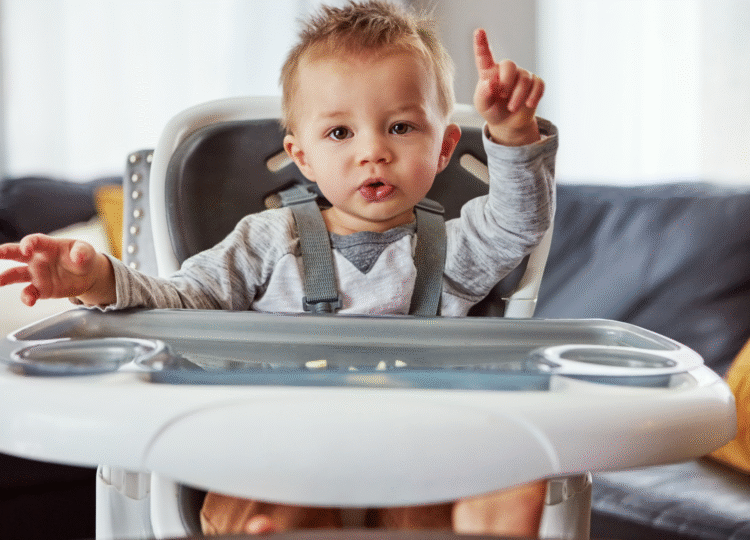
At BLW Meals, we don’t love labeling babies as “picky.” Instead, we view these behaviors as part of a baby’s natural learning process. They’re communicating with us in the only way they know how which is through their actions and reactions.
Understanding what might be behind your baby’s food refusal can help reduce the stress and help you feel more confident in supporting them. As your child approaches their first year, they may experience phases of neophobia which can lead to picky eating if you aren’t careful.
If your baby between the ages of 6 months and 2 years is suddenly refusing food they used to eat, spitting things out, or only wanting to eat a few select items, you’re definitely not alone. This is something almost every parent experiences at some point, especially in the early stages of starting solids.1-3
The good news? Many babies just need time and practice with solids. If your baby is not eating solids, it’s more likely to be just a phase versus something that requires more medical intervention. However, trust your gut and if you’re worried follow up with your healthcare practitioner.
6 reasons why it may seem like your baby isn’t eating
They are still learning
One of the most common reasons for a baby to refuse food is simply that eating is still very new. Your baby is exploring new textures, temperatures, smells, and flavors. It’s completely normal at first for them to play with food more than eat it, spit things out, or show inconsistent interest from day to day. Some babies dive in right away, while others need more time.
Every baby has their own pace
Every baby has their own pace, and some are naturally more cautious or sensitive to new experiences. Just like crawling or walking, eating is another developmental step that babies approach differently. Try not to compare your child’s journey to someone else’s. What matters most is consistent exposure and a calm environment where your baby can feel safe to explore.
They have texture preferences
Texture preferences also play a big role. Some babies are more sensitive to slippery or mashable foods, while others dislike crunchy textures. These preferences often change with time and repeated exposure. What’s important is that you continue to offer a variety of foods without pressure.
They are feeling too pressured to eat
Pressure to eat is something that can have the opposite of the intended effect. When a baby feels pressured to eat, even in subtle ways, they may resist more. Responsive feeding—where the caregiver offers and the baby decides what and how much to eat—creates a low-pressure environment that supports healthy eating habits over time. It’s okay if your baby eats very little some days or seems uninterested. Your role is simply to offer and model, and trust that they will eat what they need when they are ready. Remember, your job is to provide the food, it’s up to them whether they eat it or how much they need to eat.
They are going through a developmental change
There are also natural fluctuations in appetite due to teething, illness, or developmental leaps. On those days, your baby might eat less or show more resistance to eating food or mealtime in general. This is completely normal and usually temporary. Just continue offering without pressure and follow your baby’s cues.
They might be too full from milk
Another factor that might affect your baby’s interest in solids is milk intake. If your baby is still drinking a lot of breast milk or formula right before meals, they may not be hungry enough to explore food. If you find this is the case after offering solids for a few weeks, around eight to nine months, some families find it helpful to offer solids before milk at certain meals or to gradually space out milk feeds to allow more appetite for solid food. We have some mealtime schedules in BLW Meals app that can help you with this!
How you can support your baby
Keep offering a variety of foods in different shapes and textures. Eat together when you can, as babies learn by watching you. Let them explore, touch, and even play with their food. Try to stay calm and consistent, even when it feels frustrating. Repeated exposure is key, and over time, most babies expand their food preferences naturally.
If you’re ever concerned about your baby’s growth, weight gain, or overall nutrition, it’s always okay to consult a pediatric dietitian for reassurance and guidance. But in most cases, what you’re experiencing is completely normal and part of the process.
You’re doing a great job. Picky eating or food rejection doesn’t mean you’ve done anything wrong, it just means your baby is learning. Keep offering, stay patient, and remember that this is a phase.
For more guidance on how to support your baby during this stage, including how to offer foods safely and in developmentally appropriate ways, explore the Food Library and Guides inside the BLW Meals app.
Resources:
1.Białek-Dratwa, A., Szczepańska, E., Szymańska, D., Grajek, M., Krupa-Kotara, K., & Kowalski, O. (2022). Neophobia-A Natural Developmental Stage or Feeding Difficulties for Children?. Nutrients, 14(7), 1521. https://doi.org/10.3390/nu14071521
2.Dovey, T. M., Staples, P. A., Gibson, E. L., & Halford, J. C. (2008). Food neophobia and ‘picky/fussy’ eating in children: a review. Appetite, 50(2-3), 181–193. https://doi.org/10.1016/j.appet.2007.09.009
3.Hazley, D., Stack, M., Walton, J., McNulty, B. A., & Kearney, J. M. (2022). Food neophobia across the life course: Pooling data from five national cross-sectional surveys in Ireland. Appetite, 171, Art. 105941. https://doi.org/10.1016/j.appet.2022.105941


Comments (1)
Why You Should Stop Calling Your Kids Pickysays:
em[…] This phase is crucial for developing a diverse and open palate. Instead of seeing “picky eating” as a limitation, we should view it as an opportunity to expand horizons.Read more: Can a baby be picky? […]