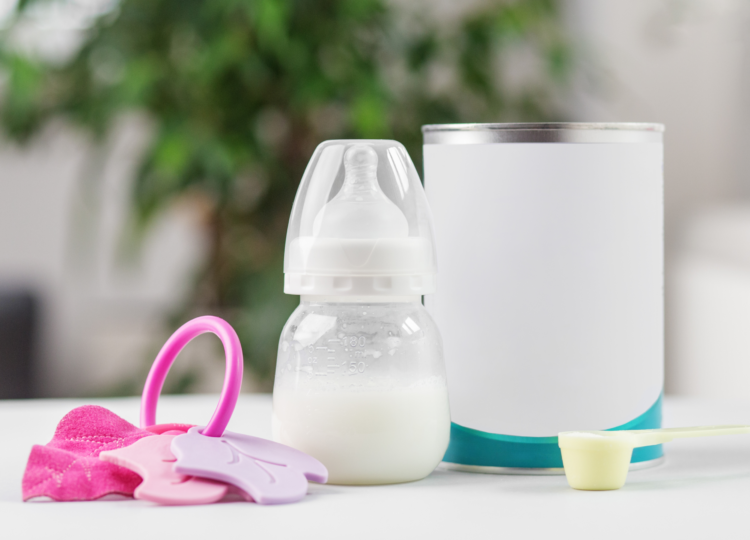


Are formula makers safe to use? Find out how to safely use formula makers to prepare bottles for your baby with confidence.
A formula maker (also known as a bottle prep machine) is a countertop appliance designed to prepare baby formula quickly, consistently, and at the correct temperature. It works by automatically measuring, mixing, and dispensing powdered formula with water, reducing the risk of incorrect ratios and clumps that can happen with manual preparation.
When used correctly, formula makers can be safe, but they require strict adherence to cleaning and maintenance guidelines. Safety depends on the accuracy of the machine in measuring formula powder and water, maintaining proper temperature, and preventing bacterial growth.
Learn more about safely handling food and bottle prep in BLW Meals app. Download it for free and read our guides!
What are the risks of bacterial contamination with formula makers?
Formula makers can become a breeding ground for bacteria if not cleaned properly. Powdered infant formula is not considered a sterile product, and if residue builds up in the machine, harmful bacteria like Cronobacter sakazakii or Salmonella can multiply. Cronobacter infection has an especially high mortality rate for infants, as high as 80%.1 It’s important to note that the rates of Cronobacter infections reported in North America are typically low at 2-4 reports per year.2
If an infant is infected with Cronobacter it can cause sepsis (a severe blood infection) or meningitis (inflammation of the brain and spinal cord), which can be life-threatening.
Other symptoms include:
- Poor feeding or lack of appetite
- Excessive crying, irritability, or fussiness
- Fever
- Low energy/lethargy
- Seizures (if meningitis develops)
- Unstable body temperature
Infants who develop meningitis may suffer from long-term neurological complications or even death.
Are formula makers safe? Can temperature inconsistencies affect the nutritional quality of the formula?
Yes. If the formula is too hot, it can break down heat-sensitive nutrients like vitamin C, B vitamins such as: thiamin, folate and pantothenic acid. If it’s too cool, it may not properly dissolve the powder, leading to clumps that may be hard to digest or that may stick to the bottle. Consistent temperature control is key. So if a machine specifies that the water needs to be a specific temperature, please follow that instruction or make sure the machine is also using that temperature setting.
Are there common user errors when using formula makers that could lead to potential safety concerns?
- Incorrect formula-to-water ratio: Some machines may dispense formula inconsistently, leading to over- or under-concentration, which can impact a baby’s hydration and nutrition. If the machine is not dispensing enough water it could be over-concentrating the formula leading to baby not getting enough fluids and if the machine is distributing too much water it could be unintentionally diluting the formula leading to possible nutrient loss or malnutrition.
- Failure to clean regularly: Residue buildup can lead to bacterial contamination leading to increased risk of the bacteria mentioned above.
- Not checking machine calibration: Some models may drift from accuracy over time due to excessive use, age, or if they have been moved around frequently.
In what scenarios do experts recommend formula makers over traditional formula preparation, if any?
I think it depends on the family dynamics as well as their desire for education on the product. As a Pediatric Dietitian I typically only offer them for very specific circumstances such as: those who frequently prepare formula, need convenience and or have expressed that they will and can commit to proper maintenance. The cases that usually come to mind are parents of multiples or caregivers who prepare formula overnight may find them particularly helpful. However, traditional hand-mixing with properly measured water and formula remains the gold standard for safety and accuracy.
What key pieces of advice should parents keep in mind when deciding whether a formula maker is a good fit for their family?
I always suggest that they:
- Research machine reliability and accuracy before purchasing, look up reviews and or any issues that have occurred with the products.
- Ensure regular cleaning and maintenance per manufacturer guidelines.
- Periodically check the formula-to-water ratio manually to confirm accuracy.
- Consider whether a formula maker genuinely saves time versus manual preparation. This may be more cleaning and checking than they expect! I always warn that having another appliance to clean can add to the mental and physical load of feeding a baby and to consider that it may be a trade-off to the convenience of having the formula made for the.
- Be aware of the risks of bacterial growth and stay vigilant with hygiene practices.
While there is limited research specifically evaluating the safety of formula preparation machines like the Baby Brezza, studies have highlighted the importance of proper hygiene in the domestic kitchen, especially concerning infant formula preparation. A review by Redmond and Griffith (2009) emphasizes that inadequate hygiene practices during the preparation and storage of infant formula can lead to microbial contamination, posing significant health risks to infants.
Given the potential for bacterial growth in formula preparation equipment, it’s crucial for parents to adhere to strict cleaning and maintenance protocols when using formula makers. Ensuring that all components are thoroughly cleaned and dried after each use can help mitigate the risk of contamination.
In summary, while formula makers offer convenience, their safe use depends on diligent hygiene practices to prevent bacterial contamination.
Frequently Asked Questions
Are formula makers safe for babies?
Formula makers are generally safe when used correctly and cleaned regularly. Safety depends on accurate setup, proper hygiene, and following both the formula manufacturer’s instructions and the machine’s guidelines.
Do formula makers measure formula accurately?
Most well-designed formula makers are built to dispense consistent ratios of water and formula powder. However, parents should always test the machine initially and ensure it is compatible with their chosen formula brand, as scoop sizes and powder density can vary.
Can formula makers cause bacterial growth?
Like bottles and feeding equipment, formula makers can harbour bacteria if not cleaned properly. Regular cleaning, sanitising, and descaling are essential to prevent buildup and keep the machine safe for daily use.
Is formula made in a machine as safe as hand-prepared formula?
Yes. When prepared using safe water, correct ratios, and proper hygiene, formula made with a formula maker is just as safe as formula prepared by hand.
Do pediatricians recommend formula makers?
Most pediatricians agree that formula makers can be a safe and convenient option, provided parents follow preparation guidelines carefully and do not rely on the machine without routine maintenance and checks.
What is the biggest safety risk with formula makers?
The main risk is incorrect preparation due to improper setup, skipped cleaning, or using an incompatible formula. These risks can be reduced with careful use and routine maintenance.
References:
Patrick, M. E., Mahon, B. E., Greene, S. A., Rounds, J., Cronquist, A., Wymore, K., Boothe, E., Lathrop, S., Palmer, A., & Bowen, A. (2014). Incidence of Cronobacter spp. infections, United States, 2003-2009. Emerging infectious diseases, 20(9), 1520–1523. https://doi.org/10.3201/eid2009.140545
Centers for Disease Control and Prevention. (2023, November 20). Cronobacter: About the bacteria. U.S. Department of Health & Human Services. https://www.cdc.gov/cronobacter/about/index.html
Redmond, E. C., & Griffith, C. J. (2009). The importance of hygiene in the domestic kitchen: Implications for preparation and storage of food and infant formula. Perspectives in Public Health, 129(2), 69–76. https://doi.org/10.1177/1757913908101604
Altazan, A. D., Gilmore, L. A., Guo, J., Rosenberg, D. M., Toupo, D., Gowins, A., Burton, J. H., Beyl, R. A., Chow, C. C., Hall, K. D., & Redman, L. M. (2019). Unintentional error in formula preparation and its simulated impact on infant weight and adiposity. Pediatric obesity, 14(12), e12564. https://doi.org/10.1111/ijpo.12564
Gilmore, L. A., Altazan, A. D., Flanagan, E. W., Beyer, A. G., Olson, K. N., O’Connell, A. A., Nguyen, T. H., Beyl, R. A., & Redman, L. M. (2020). Modifications to Infant Formula Instructions Improve the Accuracy of Formula Dispensing. Nutrients, 12(4), 1150. https://doi.org/10.3390/nu12041150
Grant, A., Jones, S., Sibson, V., Ellis, R., Dolling, A., McNamara, T., Cooper, J., Dvorak, S., Breward, S., Buchanan, P., Yhnell, E., & Brown, A. (2024). The safety of at home powdered infant formula preparation: A community science project. Maternal & child nutrition, 20(1), e13567. https://doi.org/10.1111/mcn.13567
Renfrew, M. J., Ansell, P., & Macleod, K. L. (2003). Formula feed preparation: helping reduce the risks; a systematic review. Archives of disease in childhood, 88(10), 855–858. https://doi.org/10.1136/adc.88.10.855
Losio, M. N., Pavoni, E., Finazzi, G., Agostoni, C., Daminelli, P., Dalzini, E., Varisco, G., & Cinotti, S. (2018). Preparation of Powdered Infant Formula: Could Product’s Safety Be Improved?. Journal of pediatric gastroenterology and nutrition, 67(4), 543–546. https://doi.org/10.1097/MPG.0000000000002100
Song, X., Teng, H., Chen, L., & Kim, M. (2018). Cronobacter Species in Powdered Infant Formula and Their Detection Methods. Korean journal for food science of animal resources, 38(2), 376–390. https://doi.org/10.5851/kosfa.2018.38.2.376
Norberg, S., Stanton, C., Ross, R. P., Hill, C., Fitzgerald, G. F., & Cotter, P. D. (2012). Cronobacter spp. in powdered infant formula. Journal of food protection, 75(3), 607–620. https://doi.org/10.4315/0362-028X.JFP-11-285
Additional reading:
Lieff Cabraser & Carella Byrne v. Baby Brezza Enterprises, No. 2:20-cv-04400 (D.N.J. 2020). https://www.businesswire.com/news/home/20200410005050/en/
Consumer Reports. (2024, February 21). Baby formula makers didn’t work effectively in CR evaluations. Consumer Reports. https://www.consumerreports.org/babies-kids/baby-formula/baby-formula-makers-didnt-work-effectively-in-cr-evaluations-a5992055511/