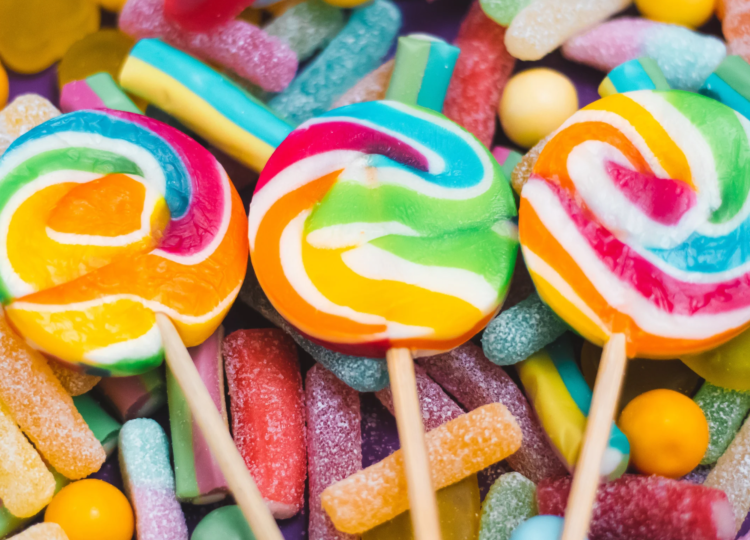

If your toddler has discovered candy and now seems to want it at every possible opportunity, you are not alone.
Before you panic, this does not mean you have ruined their eating habits by giving in a few times.
Toddlers are naturally drawn to sweet foods, and candy is especially exciting because it tastes good, often comes in colorful packaging, and tends to appear during fun experiences like parties and holidays. The goal is not to make your toddler stop liking candy. Instead, you can help them learn that candy is simply one kind of food among many.
Keep candy neutral
It is tempting to make candy a very special reward.
“You can have candy if you eat your broccoli.”
“Three more bites and then you can have chocolate.”
But when candy becomes the prize and dinner becomes the obstacle standing in the way, candy can become even more desirable.
Try to avoid describing foods as “good,” “bad,” “healthy,” or “junk.” You can simply call candy what it is.
You can still have boundaries around it without making it forbidden.
You decide when candy is available
Responsive feeding does not mean your toddler gets unlimited access to anything they request. You are still responsible for deciding what foods are offered, when meals and snacks happen, and where eating takes place. Your toddler gets to decide whether to eat and how much to eat from what is offered.
That might sound like:
“Candy isn’t on the menu right now. We can have some with snack later.”
You do not need to negotiate, convince, distract, or offer a substitute treat.
Keep the answer calm and predictable.
Don’t compensate after a candy-heavy day
If your toddler ate more candy than usual at Halloween, a birthday party, or another celebration, you do not need to “make up for it.” Do not skip snacks the next day or suddenly restrict food. Just return to your normal rhythm of meals and snacks. Toddlers’ eating naturally varies from meal to meal and day to day. One candy-filled afternoon is not an accurate picture of their overall diet.
Keep offering other foods
If your toddler keeps asking for candy and rejecting other foods, continue offering familiar meals and snacks without pressure. Include foods you know they usually eat alongside other foods you want them to continue learning about. And remember that rejection is normal. Young children often need repeated opportunities with foods before they become comfortable eating them, and picky eating behaviors are common during the toddler years.
Keep offering.
What about added sugar?
Candy is obviously high in added sugar, so it makes sense to be thoughtful about how often it is offered.
The American Academy of Pediatrics recommends avoiding foods and drinks with added sugar for children under age 2 and limiting added sugar for older children. That does not mean a toddler over age 2 can never eat candy. Think about the overall pattern of eating rather than trying to make every single food nutritionally perfect.
Offer candy alongside foods that provide the nutrients growing toddlers need.
What to do when your toddler keeps asking for candy
You may hear:
“Can I have candy?”
Five minutes later:
“Candy?”
You do not need a new explanation every time. Try:
“I know you really want some. We’re having candy after lunch today.”
Hold your loving boundary.
Predictability often works better than lengthy explanations.
Candy does not need to become a battle
Your toddler liking candy is not the problem. They are allowed to think chocolate tastes better than broccoli and your job is not to convince them otherwise. Your job is to create a feeding environment where sweets can exist alongside fruits, vegetables, grains, proteins, and all the other foods they are learning to eat. The less emotionally charged candy becomes, the easier it can be to treat it like exactly what it is: another type of food.
Frequently Asked Questions About Toddlers and Candy
Why does my toddler only want candy?
Toddlers are naturally drawn to sweet foods, and candy can be especially appealing because it tastes good, is often brightly packaged, and may be associated with exciting events such as Halloween or birthday parties. Wanting candy frequently does not automatically mean your child has an unhealthy relationship with food.
Is it normal for toddlers to ask for candy all the time?
Yes, it can be completely normal for toddlers to repeatedly ask for foods they find highly enjoyable. Young children also tend to repeat requests, especially when they are learning where the boundaries are around certain foods.
Should I let my toddler eat candy every day?
Candy does not need to be available every day. Parents can decide when and how often sweets are offered while keeping the approach calm and predictable rather than treating candy as forbidden.
How do I stop my toddler from constantly asking for candy?
Set a clear, consistent boundary around when candy is available. For example, you might say, “Candy isn’t on the menu right now. We’ll have some with snack later,” rather than negotiating each time your child asks.
Should I use candy as a reward for eating dinner?
It is generally better not to use candy as a reward for eating other foods. Saying “eat your vegetables and then you can have candy” can make the candy seem more valuable and the meal feel like something your child has to endure.
What should I do if my toddler refuses dinner and only asks for candy?
You can calmly keep the boundary that candy is not being served at that meal. There is no need to pressure your toddler to eat dinner, but you also do not need to replace the meal with candy.
Should I take candy away completely if my toddler is obsessed with it?
Completely banning candy can sometimes make it feel even more special or desirable. A more balanced approach is to offer sweets occasionally within predictable boundaries while continuing to serve a wide variety of everyday foods.
Is candy bad for toddlers?
Candy is high in added sugar and does not provide many of the nutrients toddlers need for growth, but it does not need to be treated as a “bad” food. For children over age 2, sweets can fit occasionally within an overall balanced eating pattern.
Can children under 2 eat candy?
Current feeding guidance recommends avoiding added sugars for children under age 2 when possible. Many candies are also choking hazards for babies and young toddlers, particularly hard, sticky, chewy, or round candies.
How can I make candy less exciting to my toddler?
Avoid treating candy as a reward, secret, or forbidden food. When sweets are occasionally available in a calm and predictable way, they can gradually feel less emotionally charged.
Should I serve candy with meals?
Some families choose to occasionally serve a small sweet alongside a meal or snack so that it is not positioned as a reward for eating other foods. What matters most is having clear, consistent boundaries that work for your family.
How do I handle a tantrum over candy?
Acknowledge the feeling while holding the boundary. You might say, “You really wanted candy. Candy isn’t on the menu right now,” without changing the plan or giving a lengthy explanation.
Will candy make my toddler a picky eater?
Candy itself does not cause picky eating. Picky eating is common during toddlerhood and is influenced by development, temperament, food exposure, and many other factors.
How can I get my toddler to eat healthier foods instead of candy?
Rather than trying to convince your child to choose vegetables over candy, continue offering a range of familiar and nutritious foods at regular meals and snacks. Repeated exposure without pressure helps children become more comfortable with different foods over time.
Can my toddler have candy at Halloween?
For children who are developmentally ready and over age 2, some age-appropriate Halloween candy can fit into the celebration. Parents should still remove choking hazards and supervise young children while they eat.
Where can I find easy meal ideas for a toddler who keeps asking for sweets?
The BLW Meals app offers simple recipes, toddler meal ideas, and practical feeding guidance to help families serve balanced meals without making feeding more complicated than it needs to be.